HOLY ROLLER
System-Driven God Simulation Game
Indirect-control simulation about faith, suffering, dependency, and divine power
Project Type
Personal Project
My Roles
Game Design · Unity Development · System Design
Time
February 2026 - May 2026
Overview
HOLY ROLLER is a system-driven simulation game where players take the role of a trainee god who can only influence the world indirectly.
Instead of directly controlling characters or civilizations, players shape the survival of four autonomous tribes through dice rolls, food generation, faith systems, and divine intervention cards.
The project explores the tension between care, control, dependency, and belief. As players manage resources and guide tribes toward constructing a giant statue dedicated to the player, they gradually discover that faith does not emerge from peace or stability. Faith grows from uncertainty, suffering, fear, and dependence on divine power.
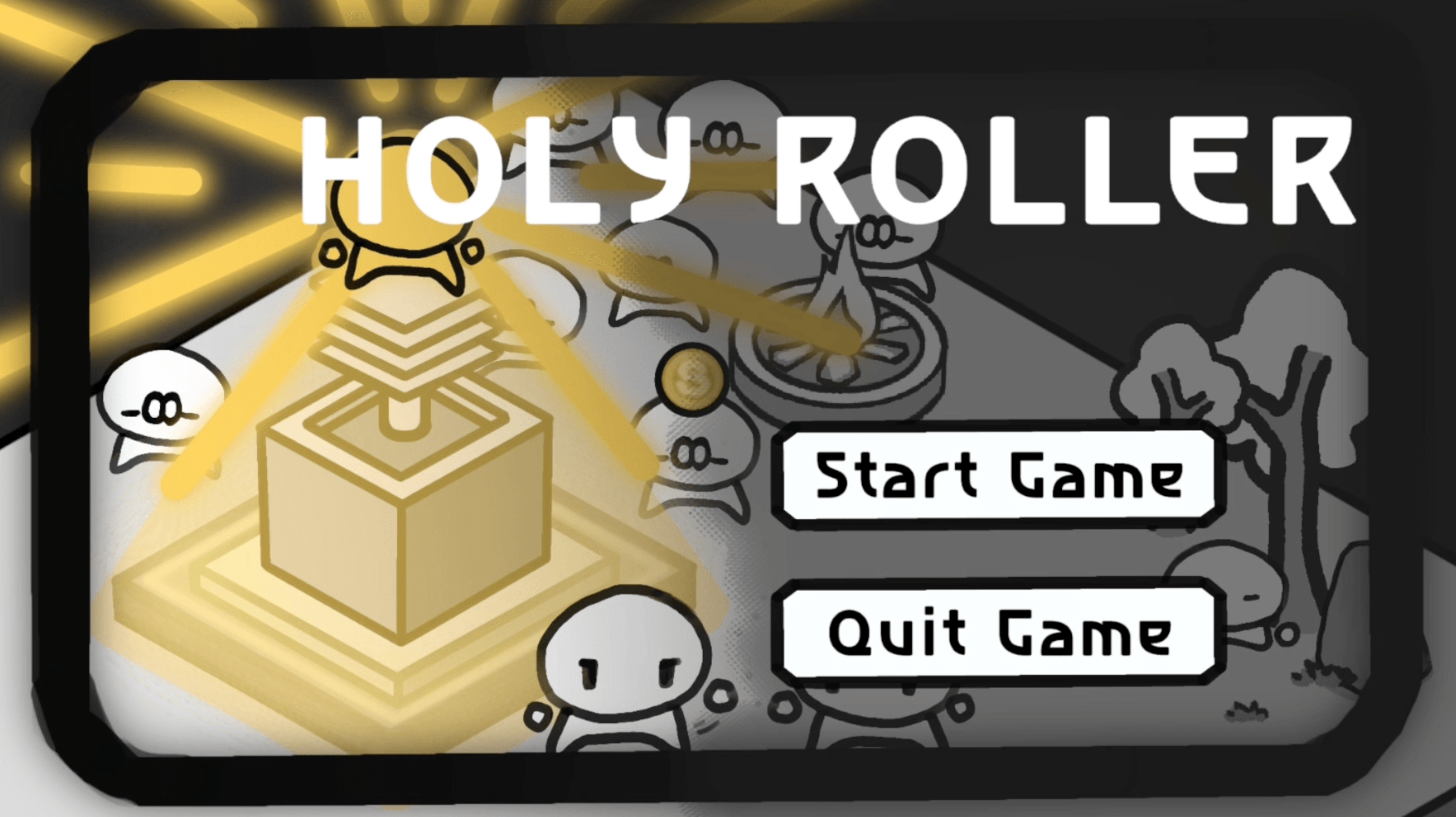
Gameplay Video
This final prototype video shows the core simulation loop, dice interaction, tribe resource management, faith changes, card intervention, and statue construction progression.
Core Gameplay Loop
The core gameplay loop revolves around dice rolls, resource generation, tribe survival, faith changes, divine intervention, and statue construction.
Players roll a D20 dice to generate points. These points can be converted into food resources called Motes or spent on intervention cards. Tribes consume food over time, and starvation increases their Faith toward the player.
Faith allows tribes to contribute coins toward building the player's statue, forming a resource cycle where survival and suffering are constantly in conflict.
- Dice Rolls -> Resource Generation -> Tribe Survival -> Faith Changes -> Divine Intervention -> Statue Construction
Design Concept
The game follows a Mechanics as Metaphor design philosophy. Resource flow, starvation, faith accumulation, and divine intervention are not only gameplay mechanics, but also narrative systems.
The project asks: What kind of god will you become when belief depends on suffering?
Features
- System-driven simulation gameplay
- Indirect player control through dice and cards
- Autonomous tribe AI behavior
- Faith and suffering economy
- Dynamic resource management
- Multi-layer statue construction progression
- Divine intervention card system
- Announcement and event feedback system
- Multiple endings based on player decisions
My Role - Game Design
- Designed the full gameplay loop and progression structure.
- Developed the Faith, Food, and Population resource economy.
- Designed card systems, dice systems, and balancing logic.
- Created the Mechanics as Metaphor systemic framework.
My Role - Unity Development
- Built the game in Unity using C#.
- Implemented autonomous tribe systems and AI logic.
- Developed dice interaction systems and weighted probability mechanics.
- Created modular UI systems, event systems, and gameplay feedback systems.
- Implemented card systems, shop systems, and survival calculations.
Dice and Points
Players roll a D20 dice to generate points. Points become the player's primary indirect-control resource, forcing them to choose between immediate survival support and longer-term divine intervention.
Mote Food System
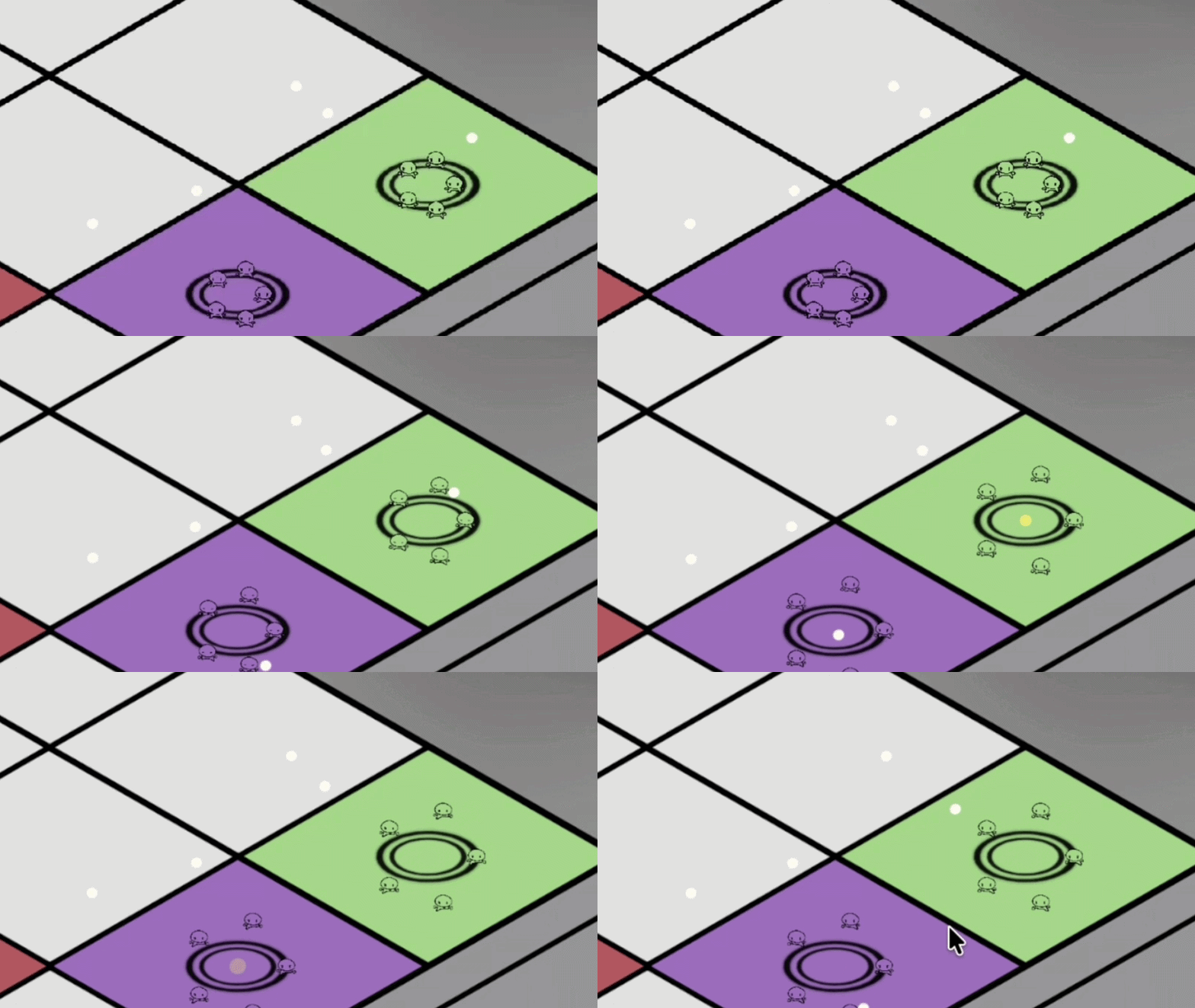
Motes are shared food creatures generated by the player and collected by tribes for survival.
Because tribes act autonomously, the player does not command individuals directly. Instead, they influence the ecosystem by deciding when and where resources enter the world.
Time Unit System
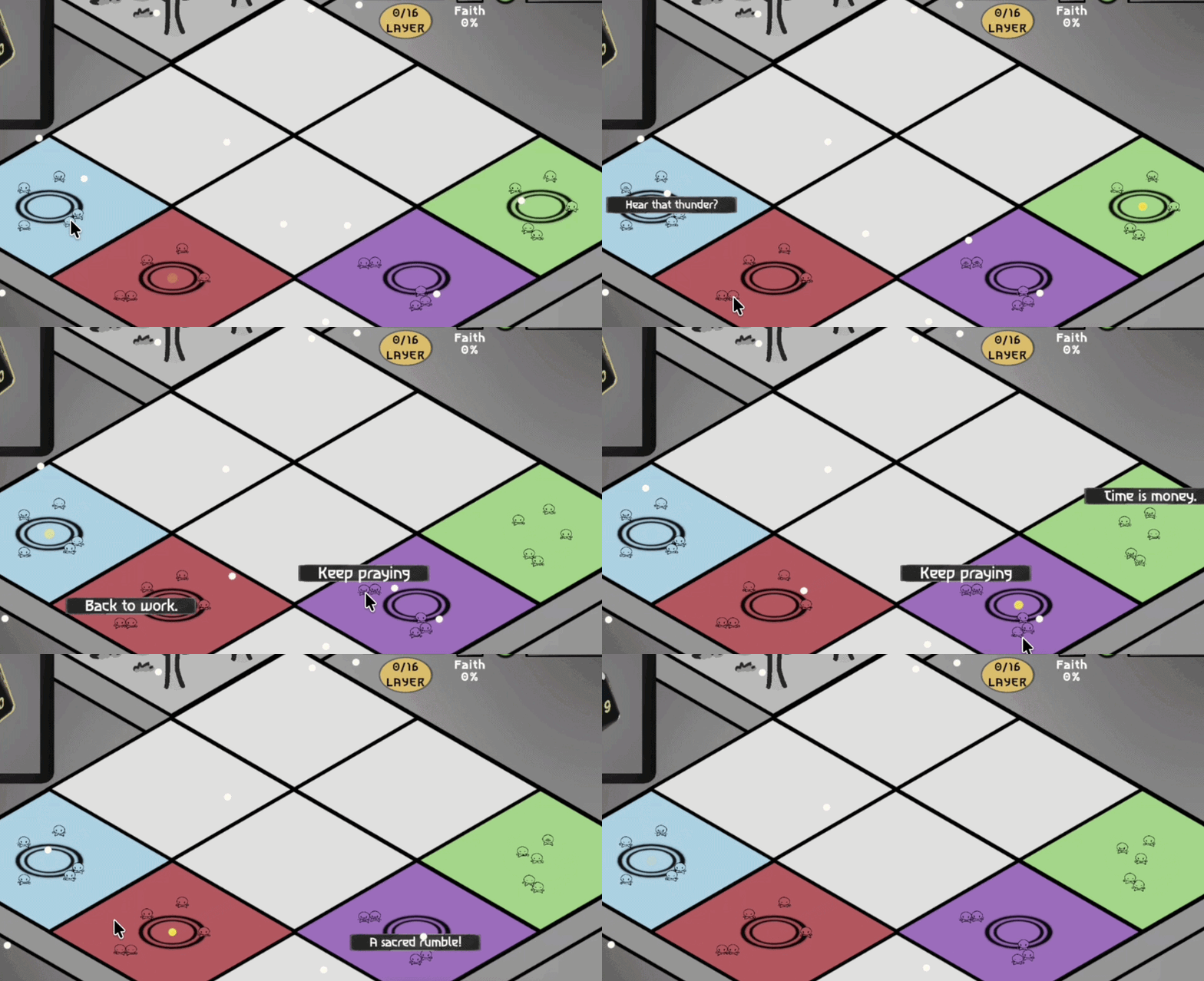
The game progresses through structured Time Units. During each unit, tribes consume food, gain or lose population pressure, adjust Faith, and contribute coins toward the statue when conditions allow.
Faith System
Faith increases during suffering, instability, and survival pressure. Higher Faith unlocks stronger divine intervention opportunities and greater contribution toward statue construction.
This system intentionally creates moral tension: the player can keep tribes stable, but stability may slow the belief economy that allows divine ascension.
Card Intervention System
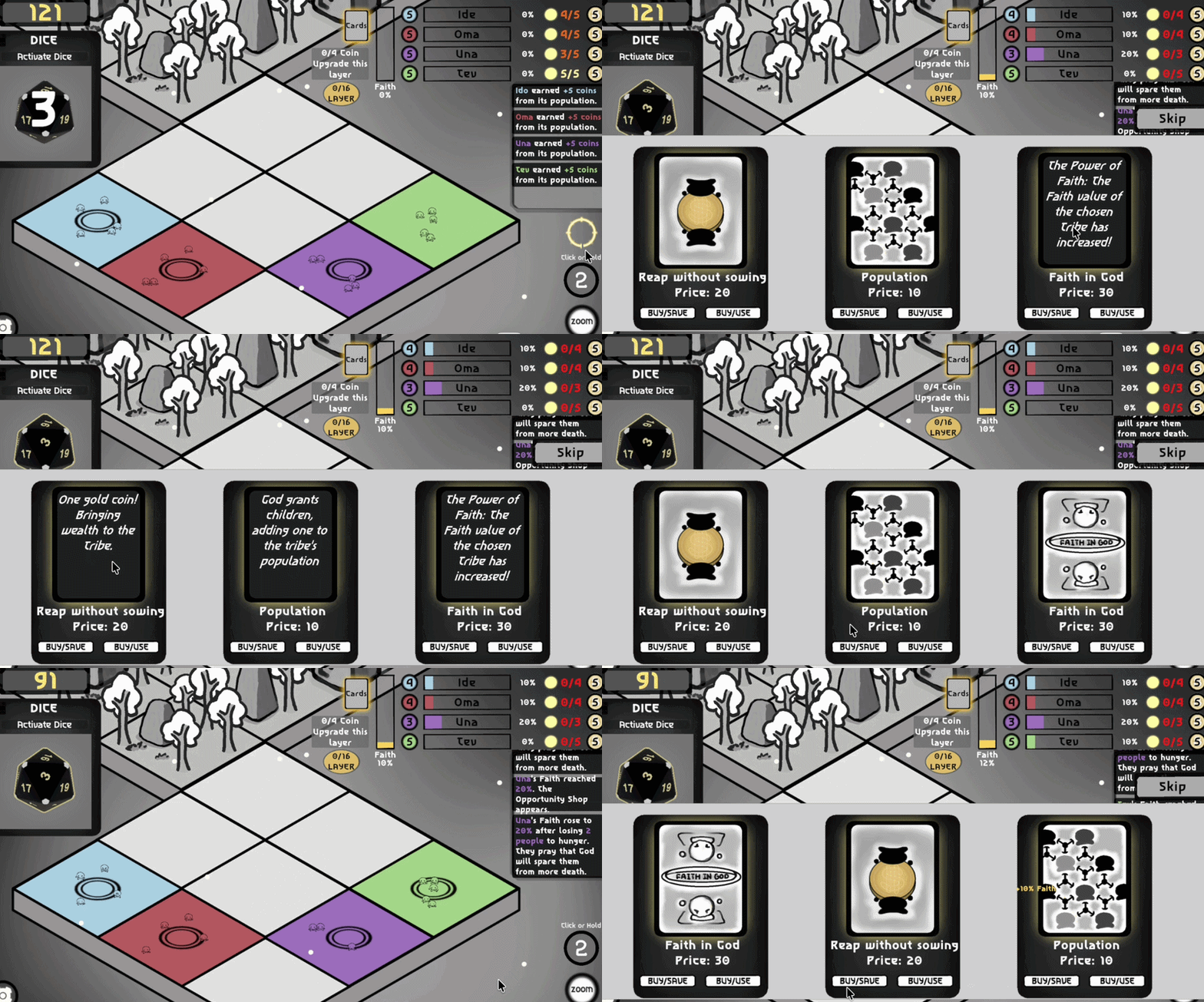
Players choose divine intervention cards to manipulate tribe growth, economy, and belief systems. Cards create moments of visible godlike power while preserving the game's indirect-control structure.
Statue Construction
The long-term goal is to complete a giant statue and ascend from trainee god into true godhood.
Statue progress turns abstract faith into a visible, multi-layer construction goal, making the player's relationship with the tribes increasingly concrete and uncomfortable.
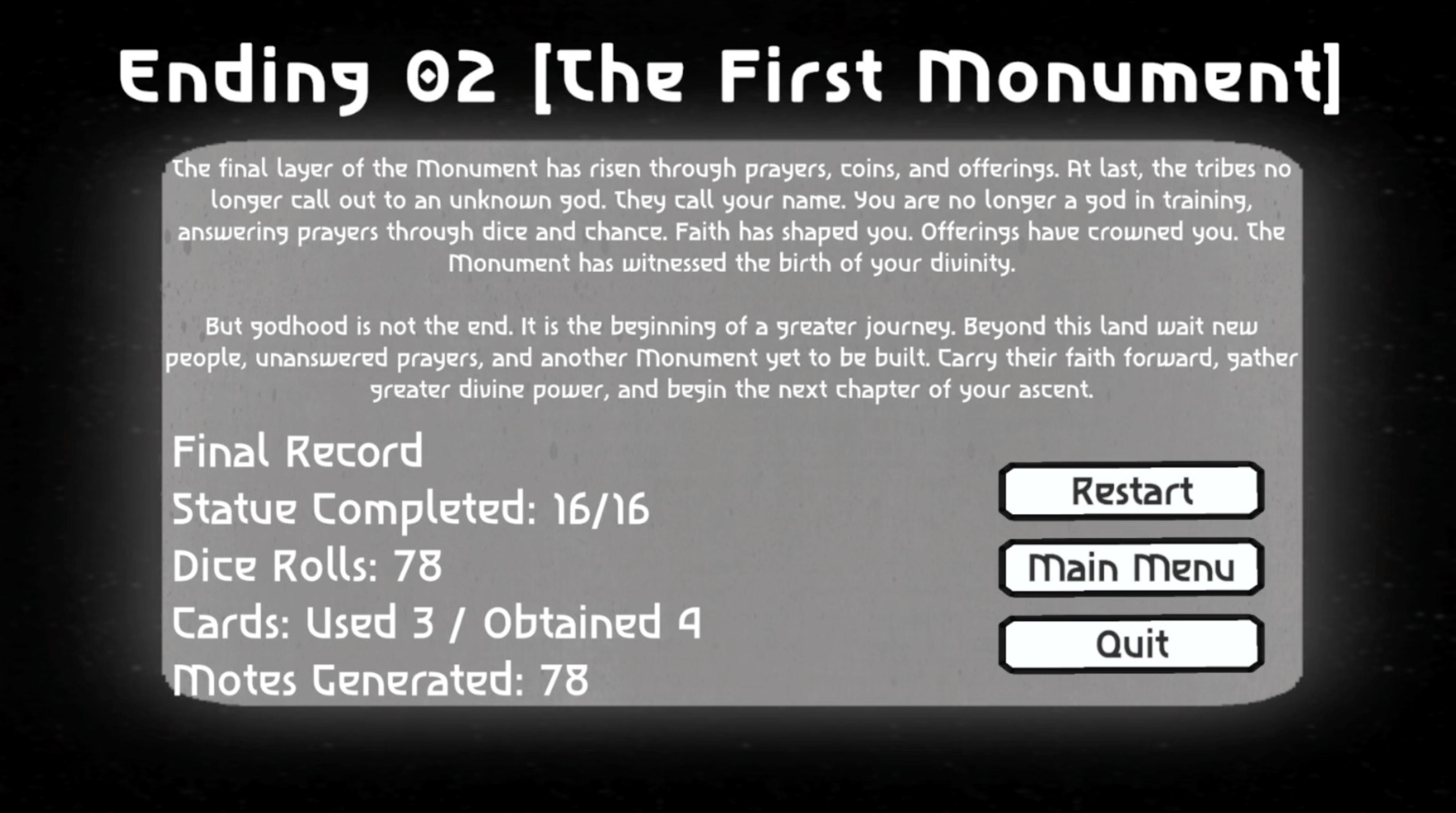
Endings
The prototype includes two endings that reflect the player's choices and relationship to the tribes.
Status
HOLY ROLLER is a playable thesis prototype. The current version includes the core gameplay loop, two endings, resource systems, faith systems, card intervention systems, and statue progression.
Future iterations may expand the card pool, tribe variety, and multi-stage progression systems.